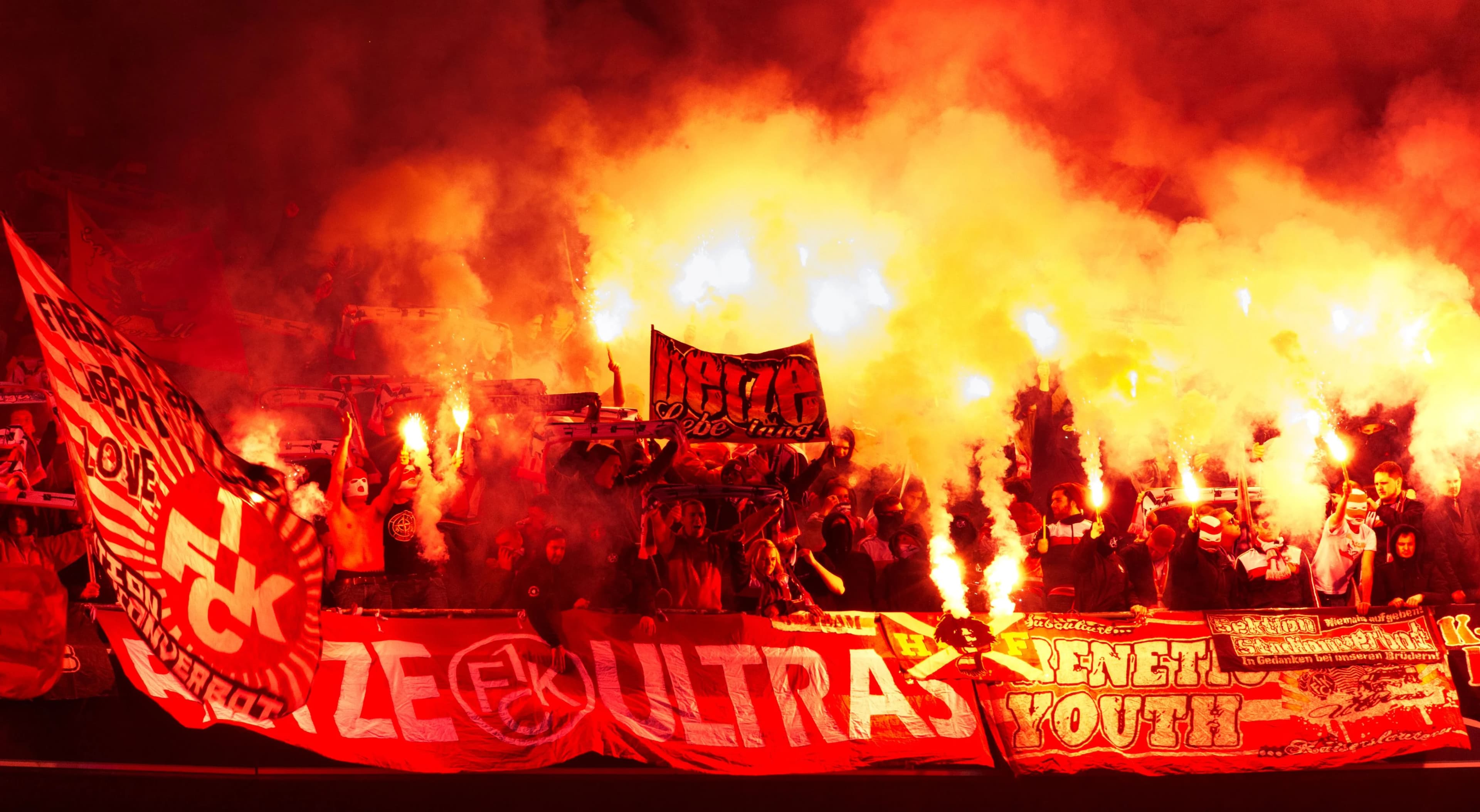
The moment the midnight lights of San Siro rise comes to mind like a dream. Late 1990s, early 2000s. Italian football was a system built not just on the ball and the goal, but on a massive myth born in the shadows of the concrete stands. The smoke rising from every match back then was a stifling fuel melting inside black papers. Thousands of madmen whose eyes gleamed when the flares were lit, and the cries of "Furia" echoing with the rhythm of that scene... While looking at the story that began in this very atmosphere, your attention needs to be directed not only to the pitch but to the shadows of the stands, behind the back doors.
Italian football has been showcased on a massive stage since the 1980s; however, instead of the ball rolling on the pitch, there was another economy turning in the dark corners of the stadiums. A complex power structure was established, formed not on the grass beneath the players' feet, but extending to the security gates at the stadium entrances and the people gathered behind those gates.
We are talking about the bloody relationship lying beneath those yellow-and-white jokes in the stands. This magazine turns the concept of "Ultras" into a fantasy that is not merely an addiction, but also an engineered mind and a dark network.
The Curva (The Back of the Truck) is not just ordinary seats sitting in a stadium. It is a reflection of Italy's local political structure. In this structure, which developed after the stadium rebellions of the 1960s, the fan is considered not "bad," but rather the "state." Ultras groups (The Group) have their own hierarchy. The loyalty of the members is so high that a person in a group feels not only themselves, but their entire family and future tied to the victory or honor of this club.
However, this "loyalty" sometimes creates a very dangerous ground. There is a leadership hierarchy within the Curva. Leaders are usually defined by their determination and physical strength, even at a young age. The songs echoing in this system should be read not just as vocalizations, but as command signals.
"We are here for football, but where there is a flow of money, we are there too," says an anonymous operator, referring to himself as a "Group Member" (Constructed - Italy). This statement is not just a fantasy; it explains how the system works.
The power of Ultras groups in the arena comes not only from their noise levels but from their physical dominance inside the stadium. In the Italian national and local leagues, these groups sometimes hold control over ticket checks. In areas carrying an accident risk or lacking security risks during ticket sales, these groups act not just as "seats" but as a commercial hub.
It can be explained like this: Group members standing at the entrance gates of the parks outside the stadium, determining ticket prices, and sometimes dividing these areas among themselves, act in the guise of a "protector" for other fans entering the stadium. However, this protection sometimes becomes dangerous even for security guards.
Example: In an incident at the entrance to San Siro in Milan in 2005, a police officer on duty for ticket control was seen committing an act of violence against a member in the "corridor" area belonging to their own group. Here, the groups also manage the commercial spaces inside the stadium. From sign sales to parking areas, this system is a complete business model.
We arrive at the most critical point. Italy's mafia structures don't just run casinos and launder money; these groups have infiltrated the stadiums. Structures like "Cosa Nostra" (Sicilian Mafia), "Camorra" (Naples region), and "'Ndrangheta" (Calabria) launder money by showing loyalty to football fanatics.
The Mechanism: Ultras group members are generally young and have low incomes. Therefore, by finding a financial transaction under the name of "sacrifice" or "protection," they launder money into the security areas outside the stadium.
In a researcher's report: "Members of the Camorra group trade for certain groups in Naples. Money is taken to 'protect' everyone going to the stadium. They call this 'security,' but it is actually a 'protection' racket."
This protection can include not only the security of other fans but even the stadium's own security personnel. In other words, even police officers can sometimes be assigned a "security" role that supports this structure. This situation was clearly exposed during the raids conducted in Naples and Lazio in the 2010s.
Share
Comments (0)
Please sign in to join the discussion.
No comments yet. Be the first to discuss!